Planters International Attends RIFAR Showcase 2026 on Climate Adaptation and Blended Finance
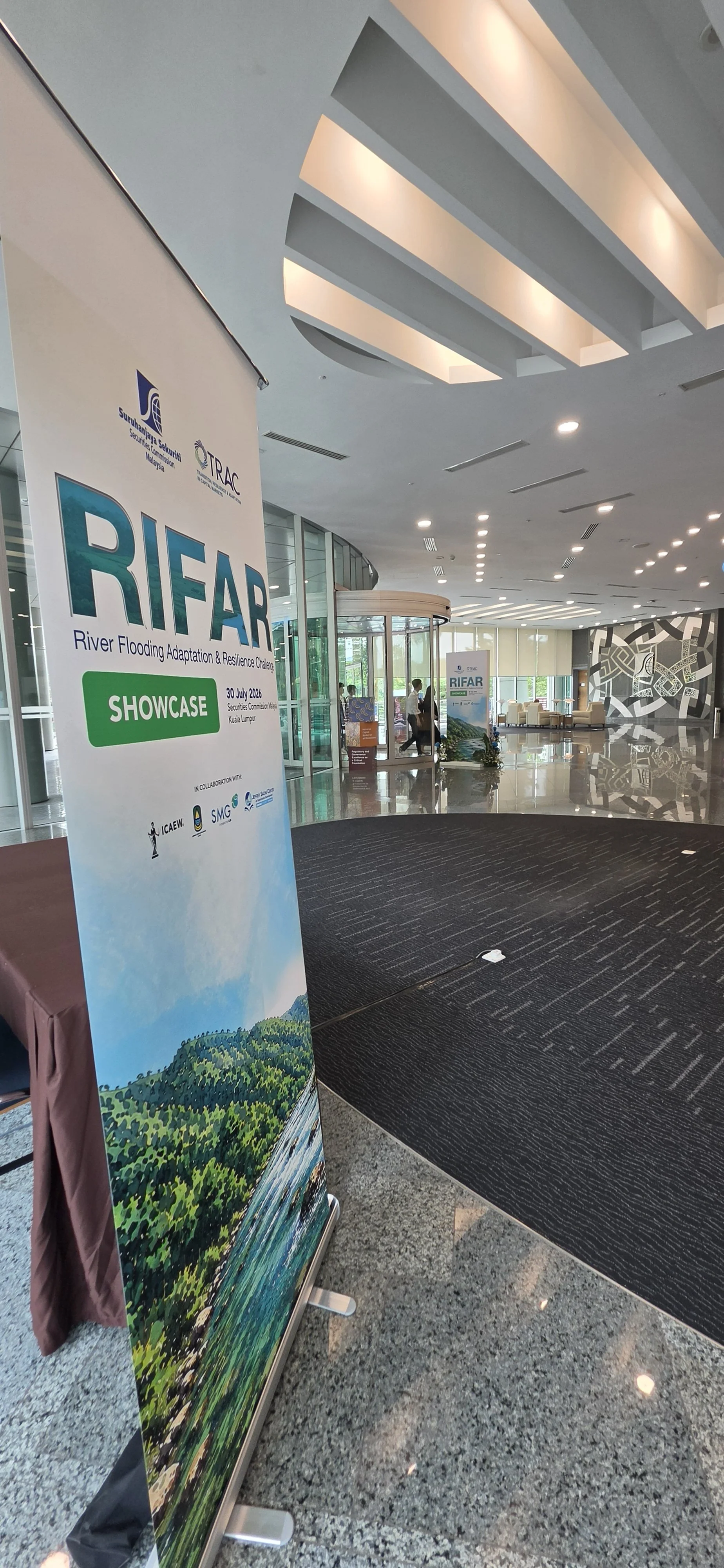
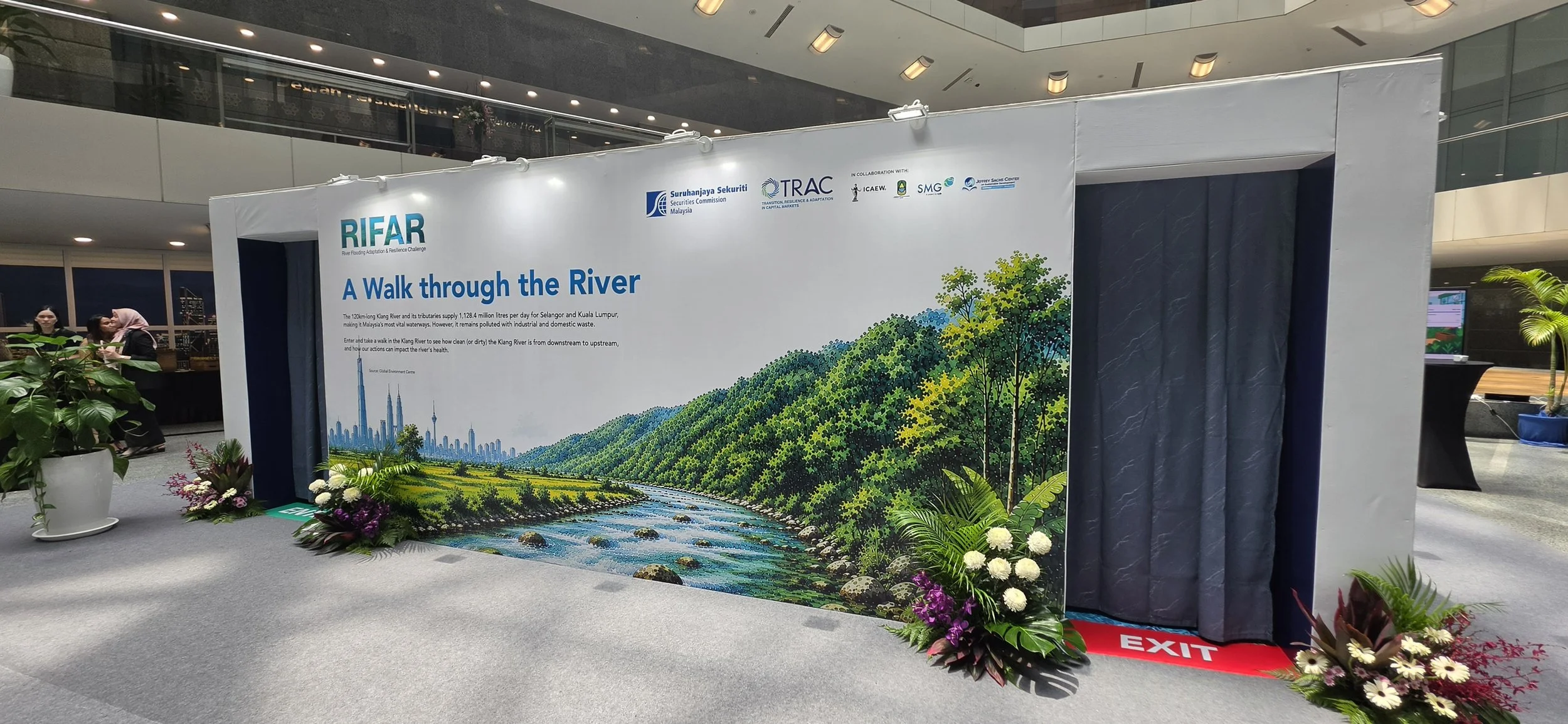
KUALA LUMPUR, 30 July 2026 – Planters International Berhad attended the River Flooding Adaptation & Resilience Challenge (RIFAR) Showcase 2026, organised by the Securities Commission Malaysia (SC) under its Transition, Resilience & Adaptation in Capital Markets (TRAC) initiative, in collaboration with the Institute of Chartered Accountants in England and Wales (ICAEW), Landasan Lumayan Sdn. Bhd. (LLSB), the Jeffrey Sachs Center on Sustainable Development, Sunway University, and strategic partners.
The showcase convened policymakers, financial institutions, government agencies, urban planners, academics, environmental practitioners and university students to explore practical approaches for strengthening Malaysia's climate resilience through blended finance, river flood adaptation, nature-based solutions and private sector participation.
Advancing Climate Adaptation Through Blended Finance
Opening the showcase, Datuk Mohammad Faiz Azmi, Executive Chairman of the Securities Commission Malaysia, highlighted that climate adaptation requires a coordinated financing ecosystem rather than reliance on a single funding source. He emphasised the importance of mobilising public funding, concessional finance, philanthropy and private investment together, supported by credible environmental data, robust governance and skilled sustainability professionals.
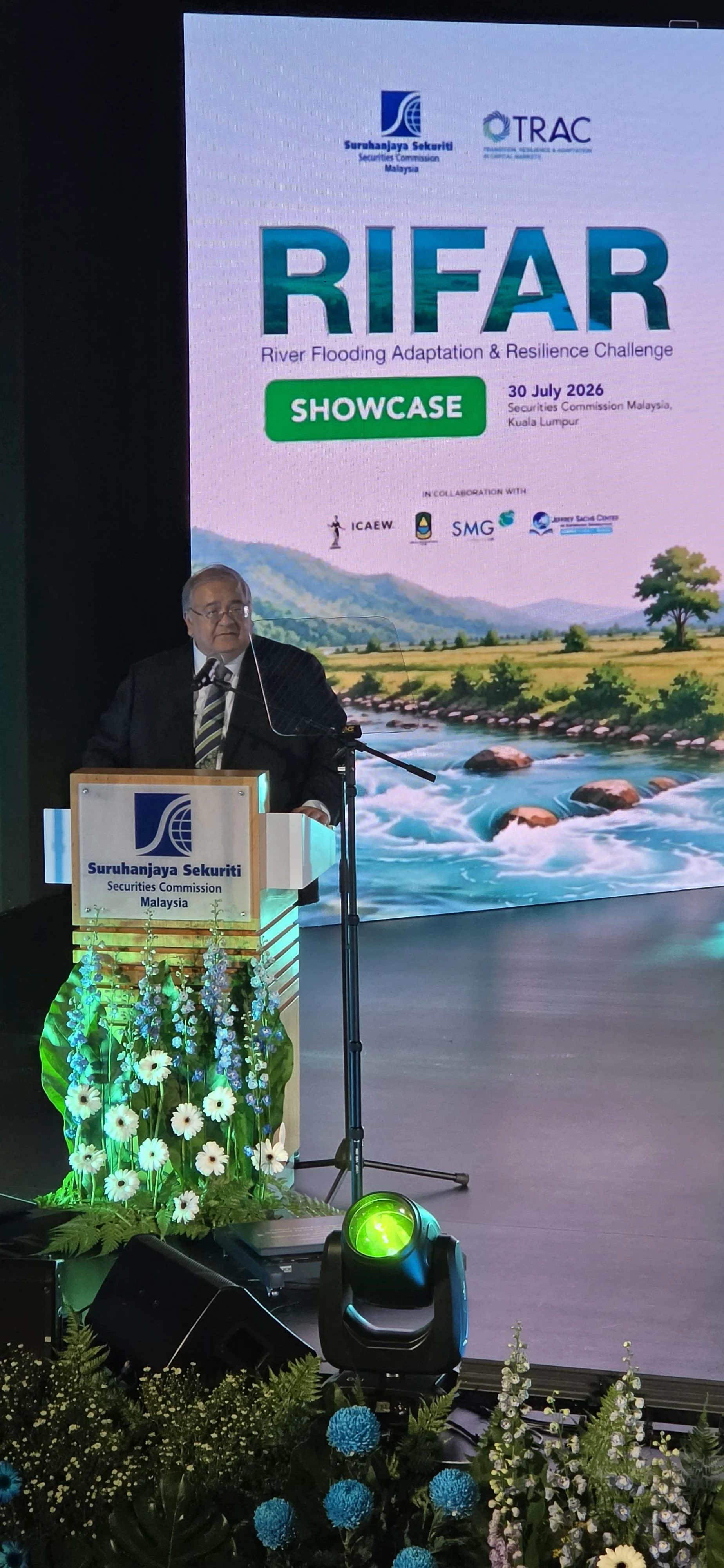
Datuk Mohammad Faiz Azmi, Executive Chairman of the Securities Commission Malaysia
He noted that effective climate adaptation projects must be capable of attracting investment while delivering measurable environmental and social outcomes, reinforcing the growing role of capital markets in supporting Malaysia's resilience agenda.
From Flood Response to Climate Resilience

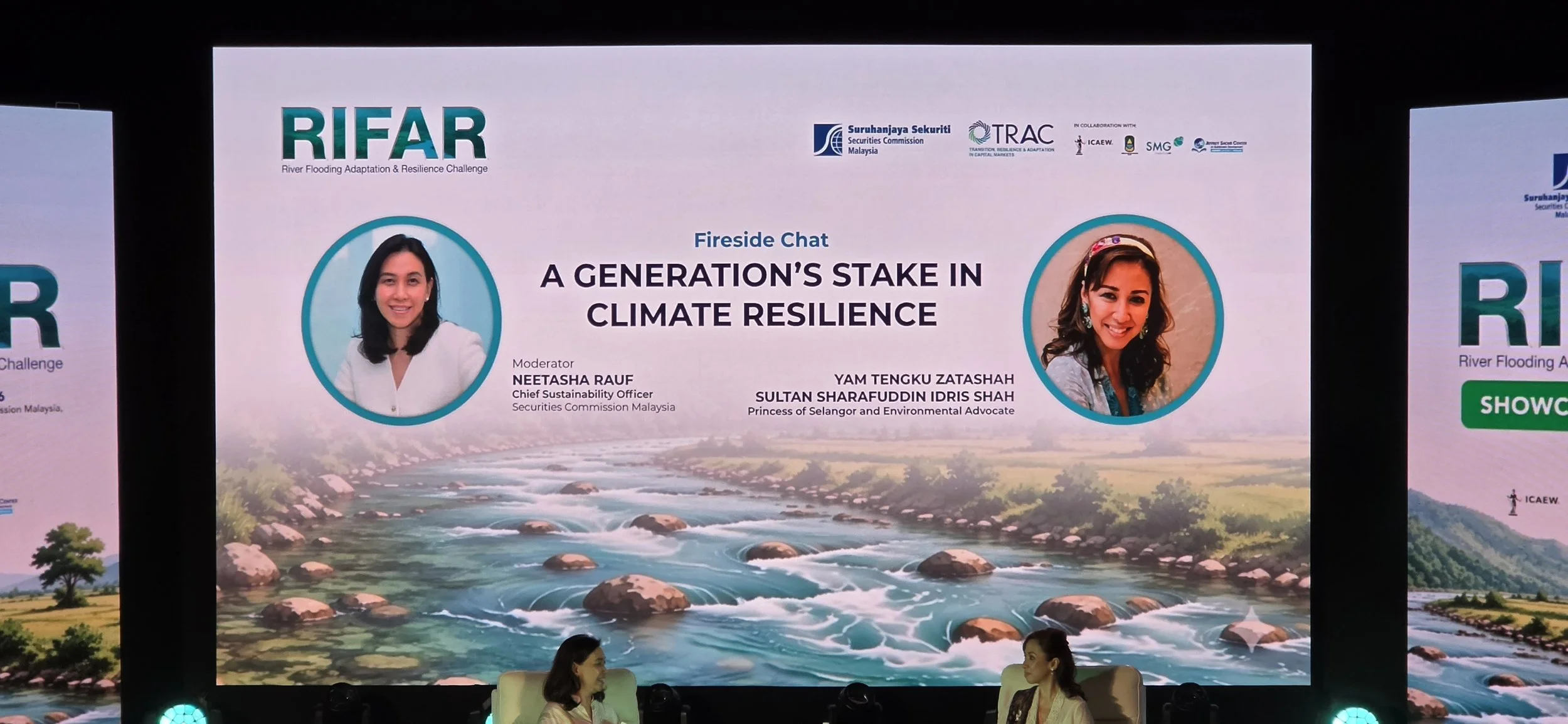
YAM Tengku Zatashah Sultan Sharafuddin Idris Shah, Princess of Selangor and Environmental Advocate
During a fireside conversation, YAM Tengku Zatashah Sultan Sharafuddin Idris Shah, Princess of Selangor and Environmental Advocate, reflected on the increasing importance of community participation in building long-term climate resilience.
Drawing on experiences from Taman Sri Muda and mangrove conservation initiatives, she emphasised that flood resilience extends beyond engineering solutions. Preventive maintenance, responsible waste management, stronger inter-agency coordination, technological innovation and active community stewardship all play critical roles in reducing flood risks while protecting river ecosystems.

YAM Tengku Zatashah Sultan Sharafuddin Idris Shah with Neetasha Rauf CSO, SECCOM
She also encouraged greater youth participation, noting that environmental resilience requires future generations to move beyond awareness and become active contributors to sustainable solutions.
Leadership and Innovation for the Next Generation

Shahril Hamdan, Head of Southeast Asia and Managing Director at Bullhound Capital
A keynote session featuring Shahril Hamdan, Head of Southeast Asia and Managing Director at Bullhound Capital, explored leadership, innovation and artificial intelligence within the context of sustainability.
He observed that while emerging technologies are transforming industries, climate change remains a challenge that demands collaboration across governments, businesses and communities. He encouraged young professionals to pursue purpose-driven careers and emphasised that meaningful environmental impact can be created through both the public and private sectors.
Mobilising Private Capital for Climate Adaptation
One of the showcase's key discussions focused on "Mobilising Private Capital within Blended Finance Structures for Adaptation," featuring:
Ahmad Farid bin Mohammed, Undersecretary, Ministry of Natural Resources and Environmental Sustainability (NRES)
Dato' Hamdan Abdul Majeed, Managing Director, Think City
Joel Khaw, Head of Group Sustainability Strategic Management and Governance, RHB Bank Berhad

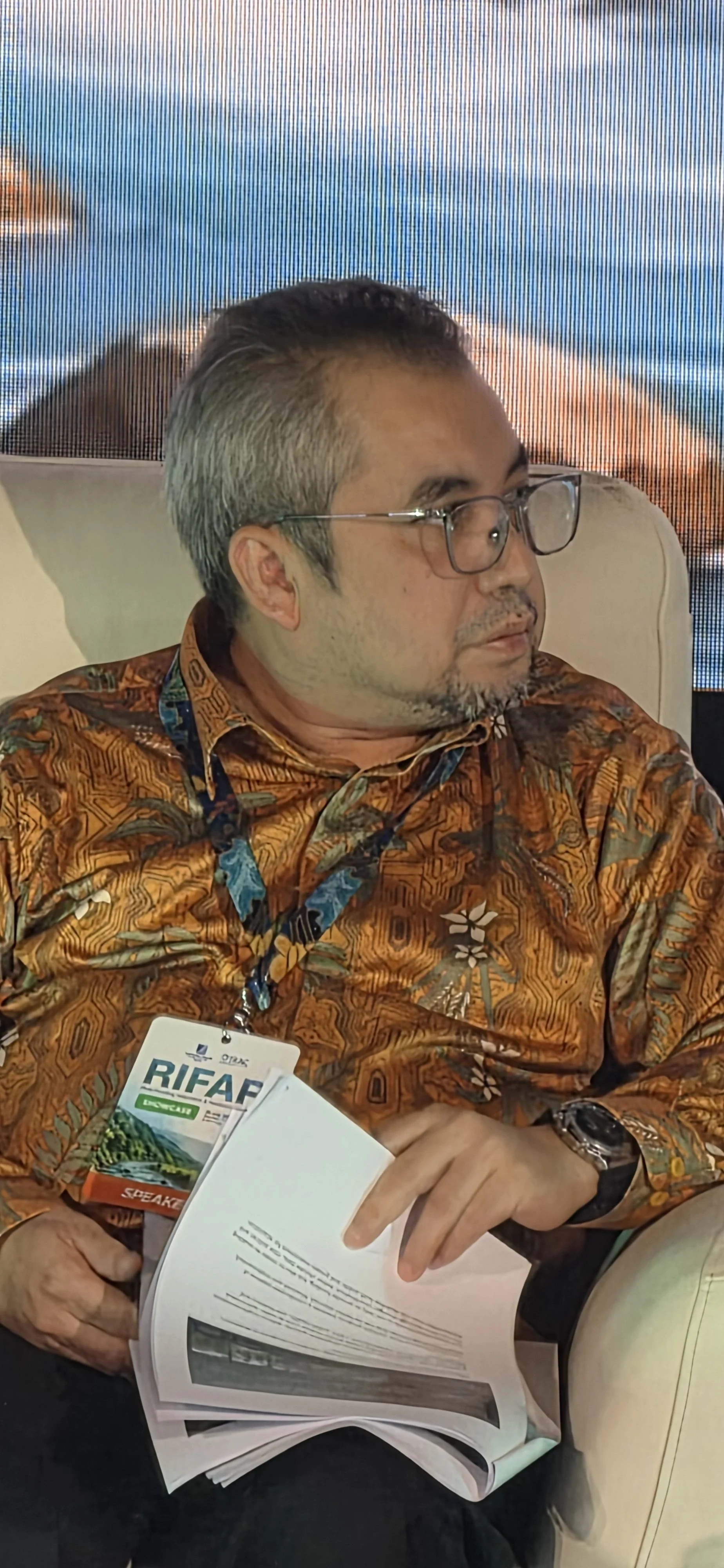
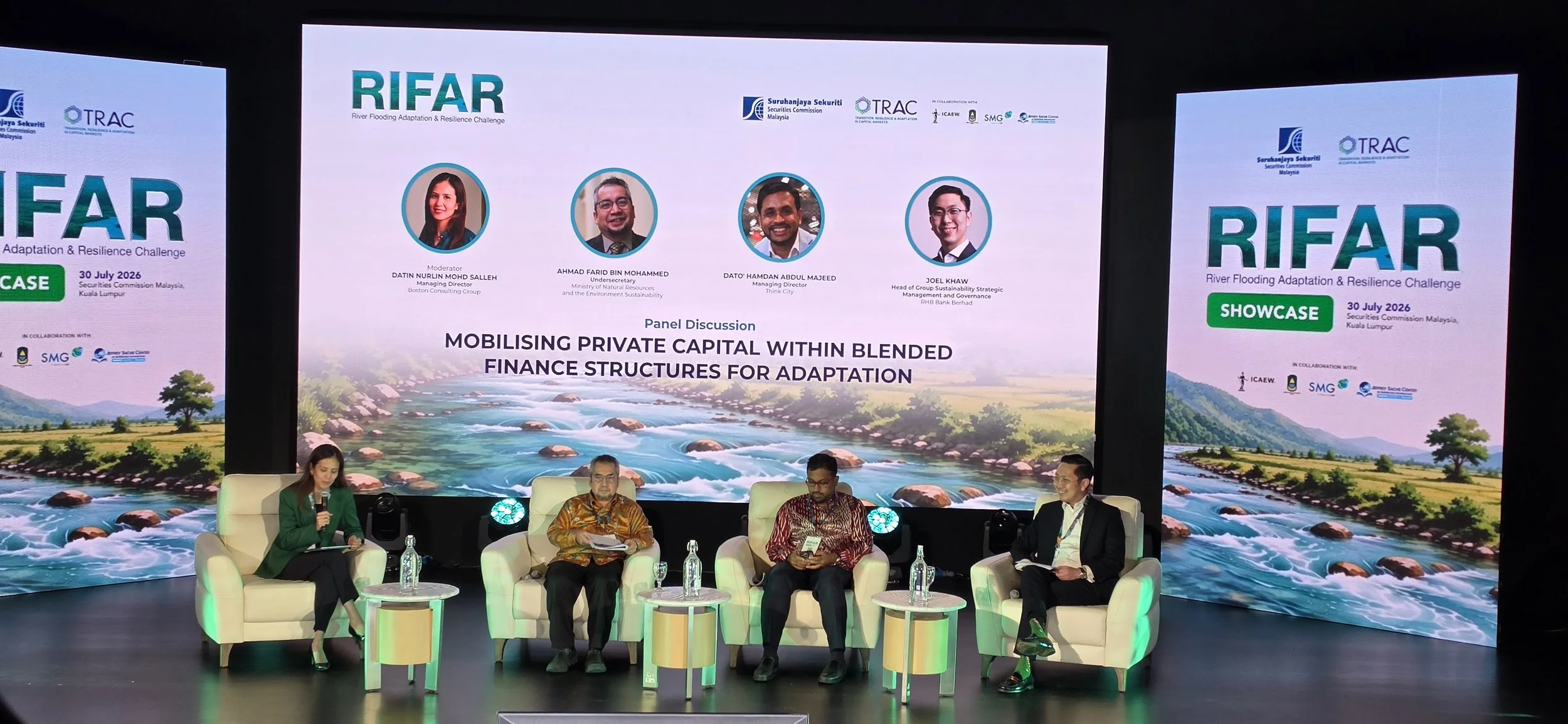

The panel highlighted that although climate mitigation has traditionally attracted greater investment, climate adaptation is becoming an increasingly urgent national priority.
Discussions centred on several critical themes, including:
the importance of science-based climate risk and vulnerability assessments;
designing adaptation projects around local needs rather than adopting generic solutions;
integrating nature-based solutions with engineered infrastructure;
developing commercially viable business models alongside environmental outcomes; and
strengthening blended finance mechanisms to bridge funding gaps between public and private capital.
Panelists agreed that successful adaptation projects should not rely solely on grants but should instead combine multiple funding sources while generating measurable resilience outcomes capable of attracting long-term investment.
Nature-Based Solutions and Future Climate Resilience
The panel also highlighted the growing importance of integrating nature-based solutions into flood adaptation strategies.
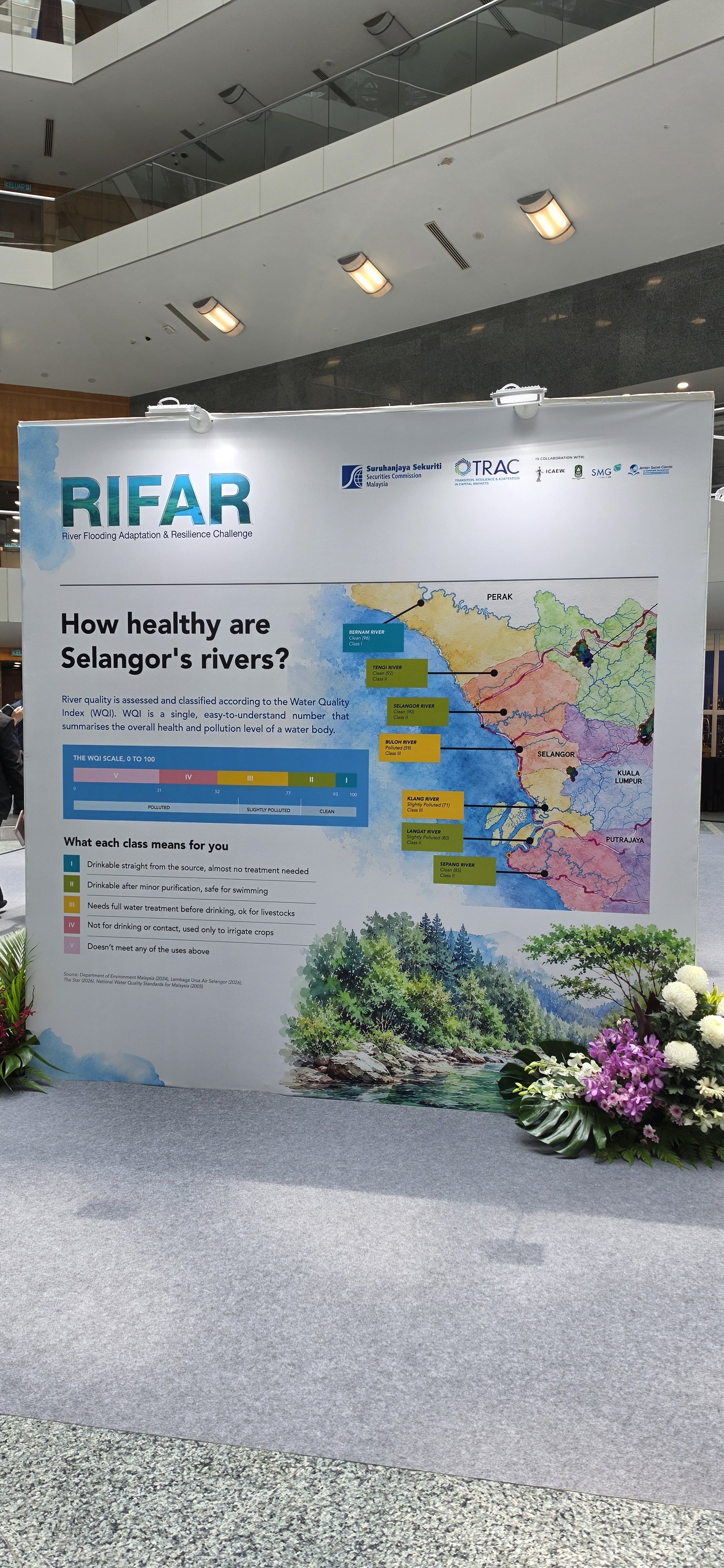
Examples discussed included upstream water retention, urban greening, bioswales, flood storage systems and mangrove restoration, demonstrating how natural ecosystems can complement conventional engineering approaches to reduce flood risks while delivering biodiversity, carbon sequestration and community benefits.
The discussion also recognised that future climate resilience must address not only flooding but also increasing urban heat, water security and long-term environmental sustainability.
Showcasing Youth Innovation
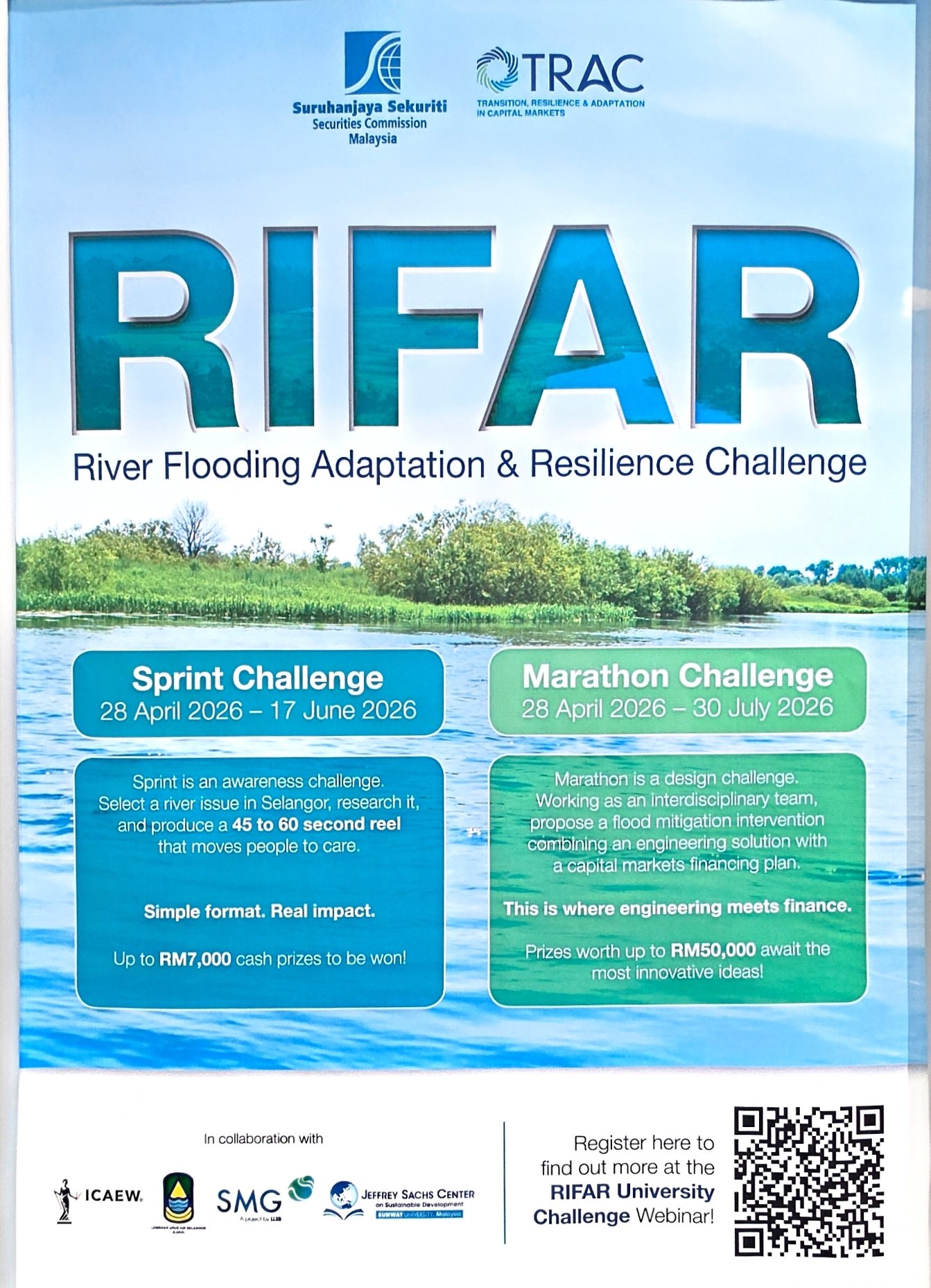
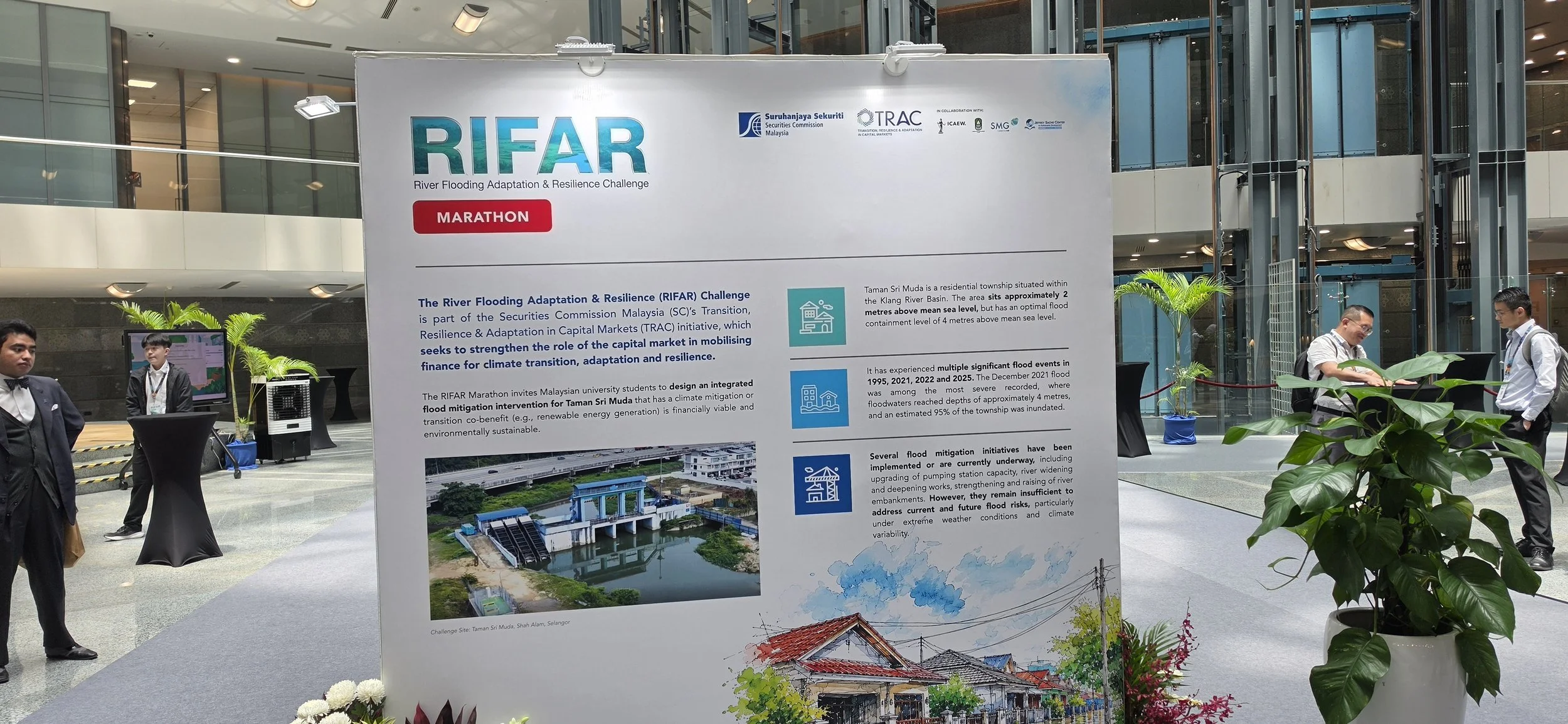
The RIFAR Marathon Challenge demonstrated the creativity and technical capability of Malaysia's next generation of sustainability leaders.
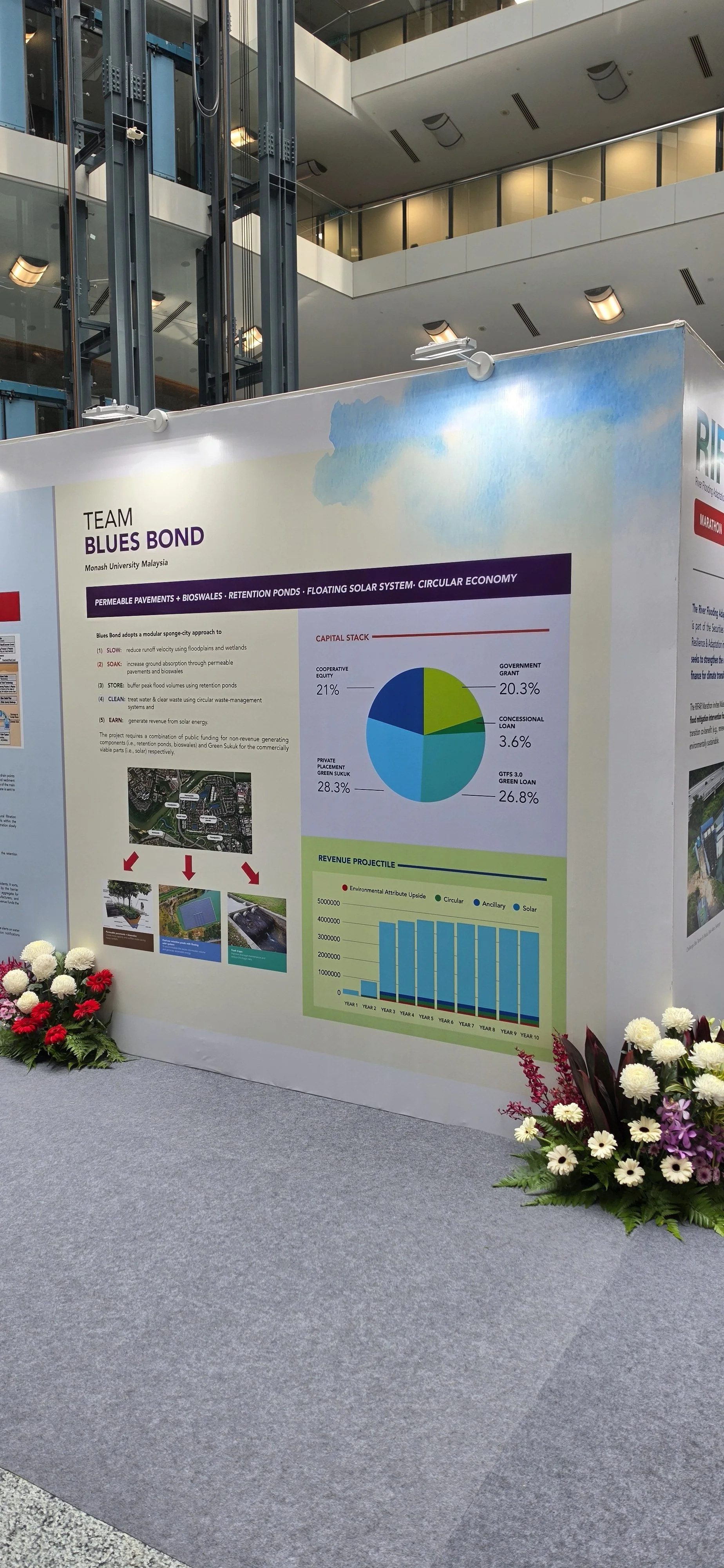
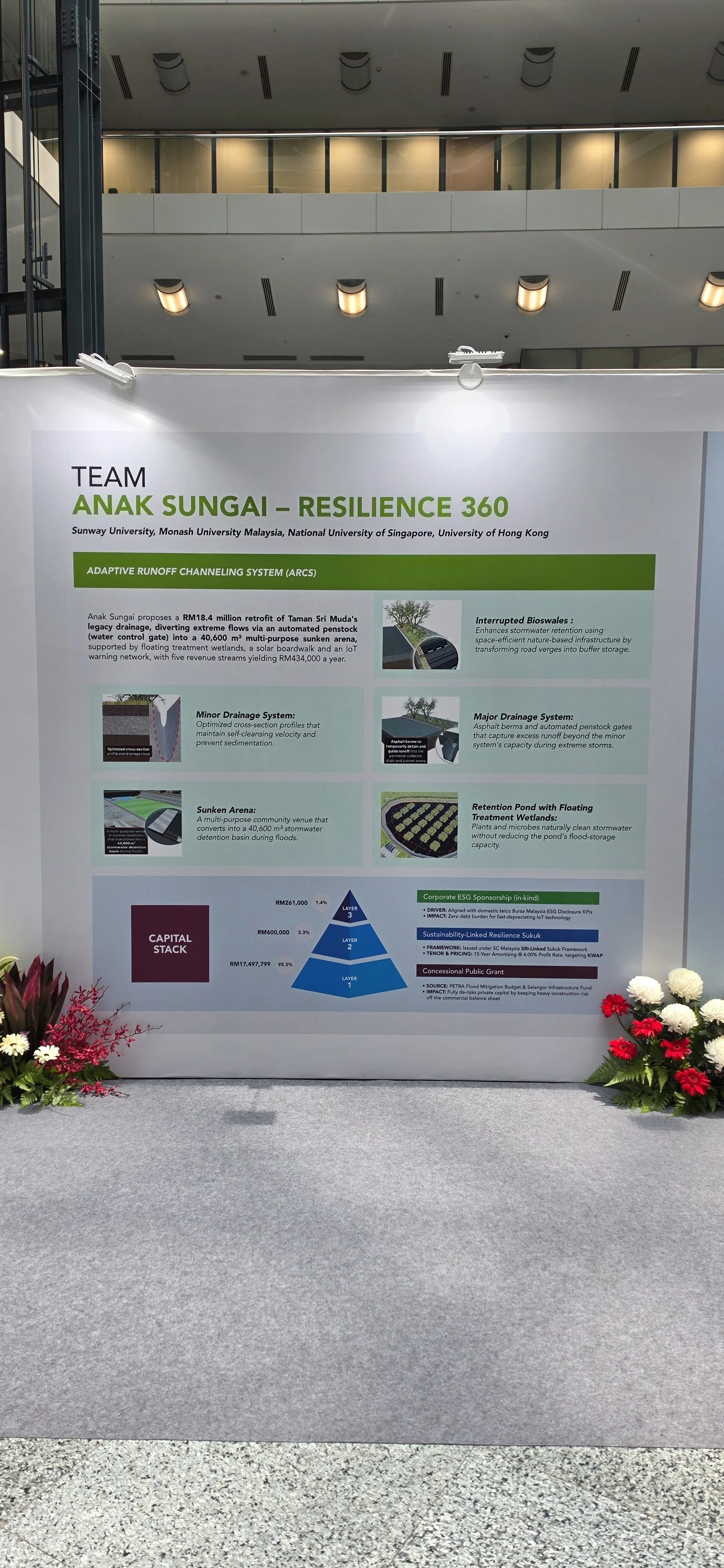
From 47 participating teams, finalists presented multidisciplinary solutions addressing flood resilience, waste management, climate adaptation financing and river restoration.
Projects were evaluated based on:
Technical feasibility
Financial viability and bankability
Innovation
Community and stakeholder integration
Presentation and communication
Judges noted that the strongest proposals combined robust technical design with practical financing strategies, recognising that successful adaptation projects require sustainable revenue models alongside public investment.
Celebrating the Winners
The RIFAR Marathon Challenge concluded with the presentation of cash prizes totalling RM50,000.
The winning teams were:
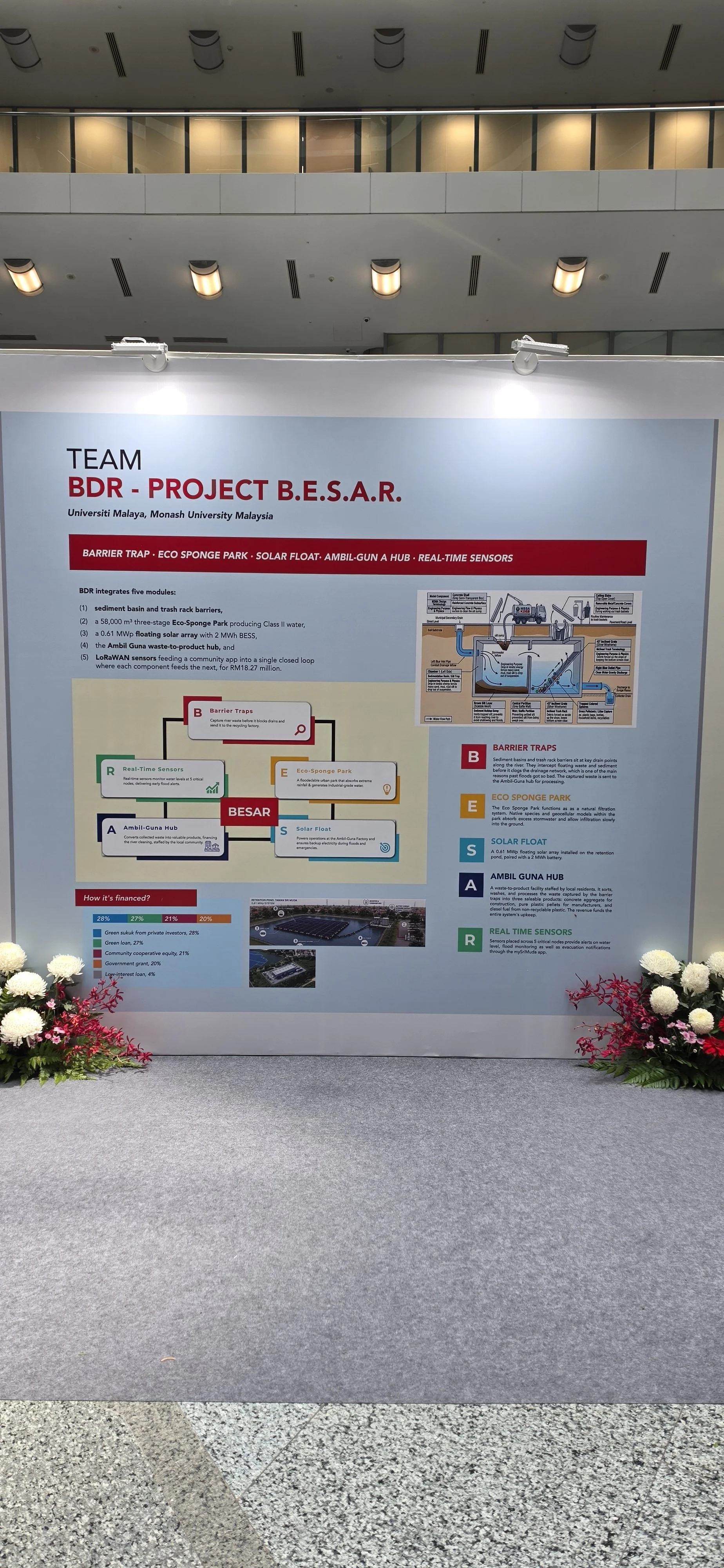
Champion (RM25,000): Team BDR – Project B.E.S.A.R (Universiti Malaya & Monash University Malaysia)
First Runner-up (RM15,000): Team Anak Sungai – Resilience 360 (Sunway University, Monash University Malaysia, National University of Singapore & University of Hong Kong)
Second Runner-up (RM10,000): Team Blues Bond (Monash University Malaysia)
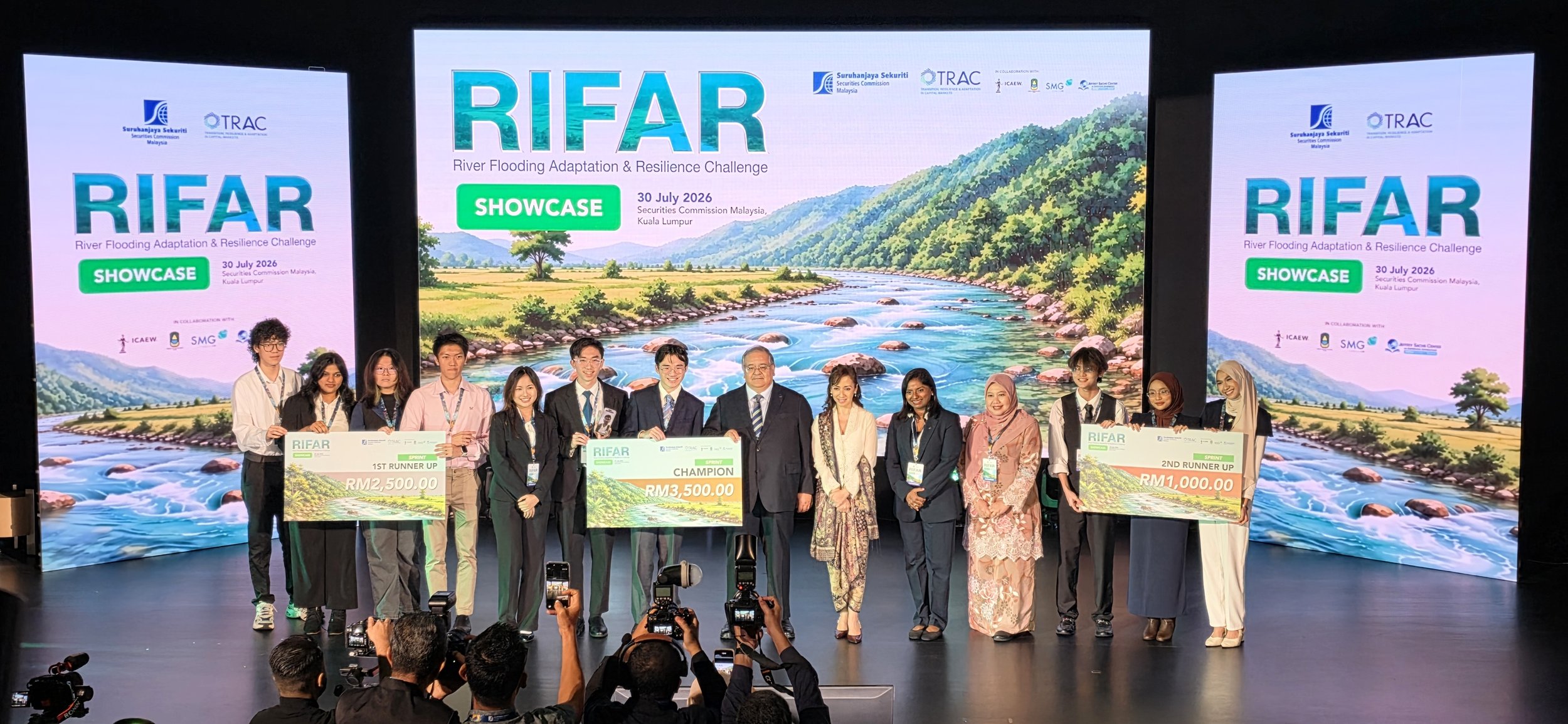
RIFAR Marathon Challenge Winners
The winning proposals demonstrated innovative approaches that combined circular economy principles, community engagement, flood mitigation and sustainable financing models.
Strengthening Malaysia's Climate Adaptation Ecosystem
Throughout the RIFAR Showcase, a consistent message emerged: future climate resilience will depend on stronger collaboration between government, financial institutions, industry, academia and local communities.
The event shows the importance of integrating climate science, innovative financing, environmental restoration and community participation to develop scalable and investment-ready adaptation projects capable of protecting Malaysia's people, economy and natural ecosystems.
For Planters International Berhad, the discussions reinforced the importance of integrated approaches that combine river restoration, biodiversity conservation, environmental monitoring, nature-based solutions and innovative financing. These principles closely align with the organisation's ongoing efforts under the Coastal Oasis: Sungai Klang (COSK) Initiative, which seeks to strengthen long-term ecological resilience and sustainable river management through science, technology and strategic partnerships.